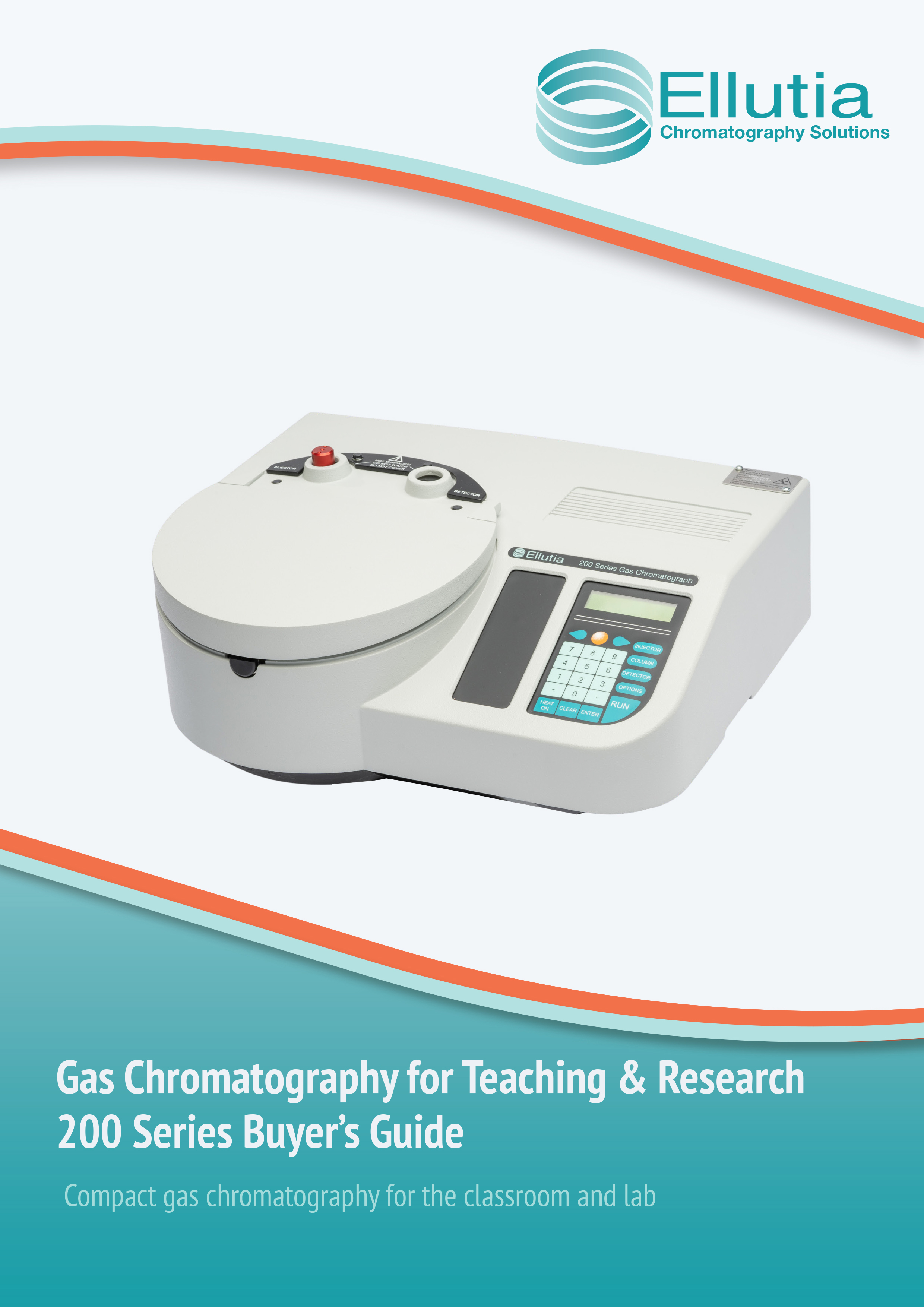
The 200 Series Gas Chromatograph delivers full GC capability in a 7.5 kg instrument. Temperature-programmable oven, five detector options, standard capillary columns. The same analytical approach as larger systems, without the bench space, cost, or setup complexity they require.
Many labs need gas chromatography but cannot justify the bench space or cost of a large system. The 200 Series Gas Chromatograph is built for those labs. It runs standard capillary columns, supports temperature programming, and is configured with one of five detector options to suit the compounds you need to measure. The 200 Series runs the same methods, columns, and analytical approaches as larger instruments. The footprint is not comparable. The results are.
200 Series GC: an introduction
An introduction to the 200 Series GC.
What the 200 Series GC delivers
The 200 Series is a full-capability gas chromatograph in a compact, lightweight format.
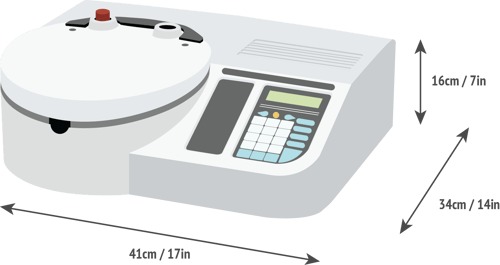
Compact footprint— at 7.5 kg and 16 cm high, it fits standard laboratory benches, teaching labs, and shared spaces where larger instruments are not practical
Temperature-programmable oven— flow-through oven design with integrated heat exchanger, ambient +15°C to 300°C, suitable for the methods run on most routine GC applications
Five detector options— FID, TCD, ECD, FPD, and TEA, selected at configuration to match the compounds and methods you need to run
Standard GC methods— runs standard capillary columns and established methods, making it straightforward to transfer existing methods from larger instruments
Detectors
The choice of detector defines what the system can measure. Selecting the right detector allows the 200 Series GC to be used for specific compound classes and analytical methods. In many cases, one detector type can be used across several related methods, depending on the compounds of interest.
Flame Ionisation Detector
Used for: Alcohols, hydrocarbons, solvents, and other organic compounds.
A general-purpose detector widely used for routine analysis of organic compounds. The FID provides stable, repeatable response and a wide linear range, making it suitable for methods where consistent quantification is required.
It is commonly used in applications such as alcohol analysis, solvent measurement, hydrocarbon profiling, and general quality control testing.
Thermal Conductivity Detector
Used for: Permanent gases and compounds that do not respond well to flame-based detection.
A non-destructive detector that responds to differences in thermal conductivity between the carrier gas and the sample. The TCD is useful where a broad response is needed and sample recovery is important.
Typical applications include gas purity testing, permanent gas analysis, and simple gas mixtures.
Electron Capture Detector
Used for: Halogenated compounds and other electronegative species.
A highly sensitive detector suited to trace-level analysis of compounds that readily capture electrons. The ECD is often used where very low detection limits are required.
Common applications include environmental contaminants, halogenated solvents, and regulated trace compounds.
.
Flame Photometric Detector
Used for: Sulphur- and phosphorus-containing compounds.
A selective detector designed to respond to specific compound classes within complex samples. The FPD is useful where targeted detection of sulphur or phosphorus compounds is required without interference from the wider sample matrix.
It is often used in flavour analysis, petrochemical applications, and targeted quality control testing.
Thermal Energy Analyser
Used for: Nitroso, nitro, and other nitrogen-containing compounds such as nitrosamines.
A highly selective detector designed for nitrogen-specific analysis. When fitted to the 200 Series GC, the TEA allows targeted measurement of nitrogen-containing compounds where selectivity is required.
Trusted in regulated and routine testing environments
The 200 Series GC is used in brewing quality control, cannabis testing, academic teaching laboratories, and routine analytical work across multiple sectors. Its compact design means it fits into existing workflows without specialist support or infrastructure.
Software control
The 200 Series GC is operated using Ellution chromatography software. Ellution provides instrument control, data acquisition, and results review for GC analysis.
Ellution is CFR compliant, offers reporting tools, and can control up to four instruments from a single workstation.
Specifications
The 200 Series GC provides full GC capability in a compact laboratory instrument.
Dimensions 16 cm (H) × 41 cm (W) × 34 cm (D)
Weight 7.5 kg
Power supply 800 VA 115 V / 230 V, 50–60 Hz
Oven temperature range Ambient +15 °C to 300 °C
Oven design Flow-through oven with integrated heat exchanger
Column support Standard capillary columns Up to 120 m (5-inch cage required above 60 m)
Detector configuration Single-channel system One detector per instrument
Software control Ellution chromatography software
Ready to configure your 200 Series GC?
We can walk through your application, your sample types, and which detector configuration suits your workflow. If you are replacing an existing system or setting up a new lab, bring those details to the conversation.
The 200 Series GC is used in brewing and distilling quality control, cannabis and hemp testing, food analysis, pharmaceutical research, and academic teaching laboratories. Its compact size and standard GC architecture make it practical for routine testing environments where bench space is limited or where a dedicated single-application instrument is needed. It is also used in research labs and industrial quality control settings where a reliable GC is required without the overhead of a larger system.
Both. The 200 Series was originally developed with teaching environments in mind, which led to a compact, robust design that is straightforward to operate. That same design makes it well suited to routine laboratory work beyond education. It is now used in brewing quality control, cannabis testing, food analysis, and other applied settings where a reliable, easy-to-operate GC is needed. It is a professional instrument that happens to work well in teaching labs, not a teaching instrument that has been adapted for professional use.
The 200 Series and 500 Series are designed for different analytical demands. The 200 Series is built for routine, single-method testing where simplicity, compact size, and ease of use are the priority. The 500 Series is a high-performance instrument designed for faster analysis, more complex method requirements, and higher throughput. If your workflow involves straightforward routine testing with established methods, the 200 Series is likely the right fit. If you need faster run times, more demanding separations, or higher sample volumes, the 500 Series is worth considering. Ellutia can help assess which configuration suits your specific application.
The 200 Series GC can be used in regulated analytical environments when operated with Ellution chromatography software, which supports CFR-compliant data handling. This includes workflows in pharmaceutical quality control, food testing, and other regulated sectors where structured data management and audit trails are required. Method validation and system suitability requirements should be assessed against the specific regulatory framework in use.
No. The 200 Series GC is configured with a single detector chosen at the time of order to match the intended application. The five available options are FID, TCD, ECD, FPD, and TEA. Because the detector is integrated into the system configuration, it is not designed to be swapped after installation. Selecting the right detector for your application before purchase is important, and Ellutia can advise on the most appropriate option based on the compounds and methods you need to run.
The 200 Series GC is fitted with a split/splitless injector as standard, suitable for most liquid sample introduction. On-column injection is available as an option for applications where thermal degradation of the sample is a concern. The system is also compatible with Ellutia autosamplers for liquid, headspace, and related automated sample introduction. The appropriate sample introduction method depends on the sample type, matrix, and the analytical method being used.
In most cases, yes. The 200 Series uses standard capillary columns and supports temperature programming, which means established GC methods can generally be transferred from larger instruments without significant changes to the analytical approach. The main practical considerations are the maximum oven temperature of 300°C and the injector configuration. Methods that require higher oven temperatures or specific inlet setups should be checked for compatibility before transfer. For the majority of routine GC applications, method transfer is straightforward.
For most routine GC applications, no. The 200 Series runs standard capillary columns and established GC methods in the same way as larger instruments. There are some practical limits to be aware of. The maximum oven temperature is 300°C, and the injector is smaller than those on some larger systems. For the majority of applications this is not restrictive, but methods that require higher oven temperatures or specific inlet configurations should be checked for suitability. In practice, the 200 Series covers around 95% of the applications typically run on larger GC systems when configured appropriately.
The 200 Series GC is operated using Ellution chromatography software, which is included with the system. Ellution handles instrument control, data acquisition, and results review. It supports CFR-compliant data handling and can control up to four instruments from a single workstation. Reporting tools are built in. No separate software purchase is required for standard operation, though specific compliance configurations should be discussed at the time of order.
Yes. The 200 Series GC is compatible with Ellutia autosamplers for liquid, headspace, and related sample introduction techniques. Autosampler choice depends on the sample type, workflow, and level of automation required. For laboratories running high sample volumes or overnight batches, automated sample introduction reduces operator time and improves run-to-run consistency. If autosampling is important for your application, this should be discussed as part of system configuration to ensure the right setup is specified from the outset.