NDMA Analysis in Malt and Beer

Application Note:

Analysis of NDMA contamination in malt and beer using GC-TEA.

Introduction

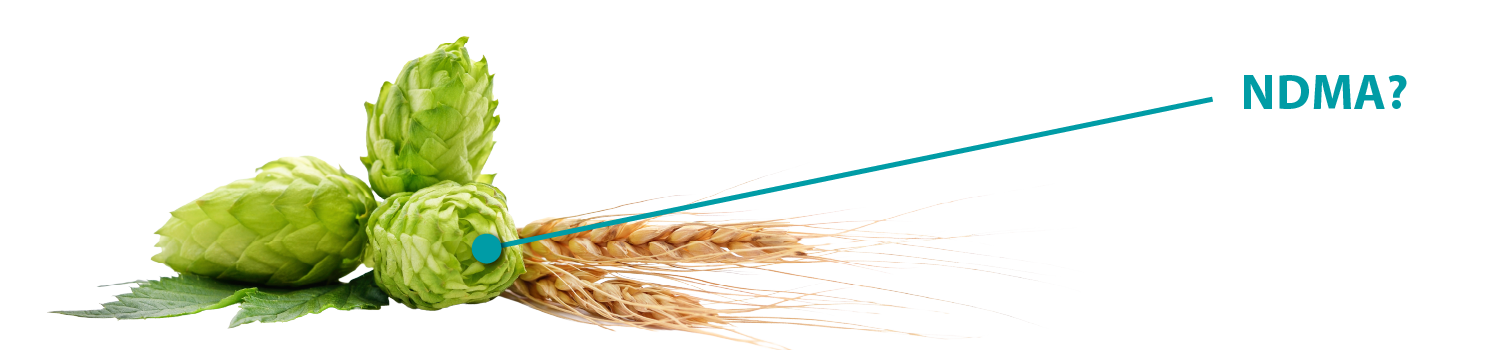
Nitrosamines can form during the malting process, particularly when barley is kiln dried at high temperatures. One of the most closely monitored compounds is NDMA, a nitrosamine that has been studied extensively in food and drink products.

Although modern malting techniques have reduced formation significantly, trace levels can still occur. Because NDMA is a carcinogenic compound, breweries and maltsters need to understand how much is present in raw materials and whether it carries through into finished beer.

Measuring NDMA at low levels allows producers to monitor malt quality, check finished products, and confirm that nitrosamine levels remain within accepted limits.

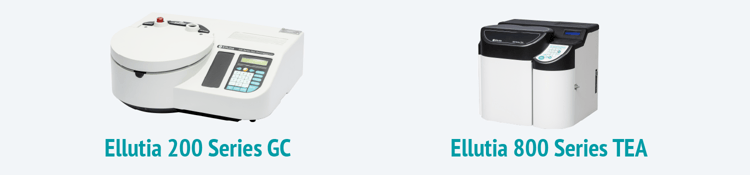
This method uses the Ellutia 200 Series Gas Chromatograph with an EL-WAX column alongside the 800 Series Thermal Energy Analyser to measure NDMA and related nitrosamines in malt and beer

NDMA_Malt

The Challenge


NDMA can form early in the process and persist into the final product


NDMA can form during kiln drying when nitrogen oxides react with naturally occurring amines in barley. Once formed, it can remain in the malt and pass through into the finished beer.

That creates a challenge. Malt is a complex material, and beer contains sugars, alcohol, dissolved gases, and flavour compounds. These components can interfere with detection if the method is not selective enough. At the same time, NDMA must be measured at very low levels, often below 1 ppb.

When working at these concentrations, small variations in extraction, separation, or baseline stability can affect the result. Laboratories therefore need a method that isolates NDMA clearly from the brewing matrix and detects it reliably at trace levels.


NDMA_in_Malt_Beer

The Solution


GC-TEA isolates NDMA from the brewing matrix 


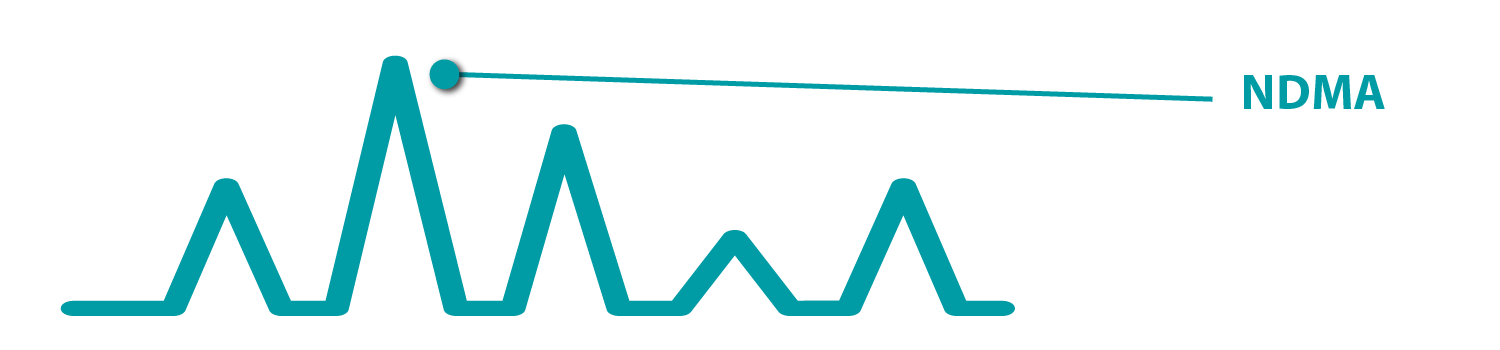
Gas chromatography separates NDMA from the surrounding compounds present in malt and beer extracts. The TEA then detects the N–NO functional group shared by nitrosamines, which provides strong selectivity even in complex brewing matrices.

This selectivity is important at trace levels. When NDMA is present below 1 ppb, background compounds must be separated clearly to avoid interference. A stable baseline and clean peak shape make it easier to distinguish NDMA from sugars, alcohol, and other organic components.
 

200_Series_GC_Thermal_Energy_Analyser_TEA


In this study, the Ellutia 200 Series Gas Chromatograph fitted with an EL-WAX column was used alongside the 800 Series Thermal Energy Analyser. This configuration provided the separation and sensitivity required to detect NDMA at very low concentrations in both malt and finished beer.

By combining careful extraction with selective detection, the method gives breweries and laboratories a clear way to measure NDMA confidently in real production samples.
 

Method Overview


How NDMA is analysed in malt and beer


Malt Preparation

Fifty grams of ground malt are extracted with 100 mL of deionised water. An internal standard is added to assess recovery. The mixture is filtered and then subjected to liquid–liquid extraction using sodium chloride and dichloromethane.

The dichloromethane layer is dried with sodium sulphate and concentrated to 1 mL under nitrogen before injection into the GC-TEA.

 
Beer Preparation

Twenty-five millilitres of beer are sonicated to remove dissolved gases. Sodium chloride and dichloromethane are added to carry out liquid–liquid extraction. The organic layer is dried and injected directly into the GC-TEA.

 
Instrument Conditions
  • Injector: 250 °C
  • Injection: Splitless, 1.0 µL
  • Column: EL-WAX, 30 m × 0.25 mm × 0.25 µm
  • Oven: Start 45 °C, ramp to 130 °C, then to 230 °C
  • Pyrolyser: 500 °C
  • Interface: 250 °C

These conditions allow separation of NDMA from other nitrosamines and from the brewing matrix, with detection limits below 1 ppb.

Watch

NDMA contamination in malt and beer

A breakdown of how NDMA can form during malting and how it carries through into beer. Covers the science behind formation and how breweries measure it at trace levels.


Results and Reliability


What the analysis shows


The eight-component nitrosamine standard mix was clearly separated under the stated GC conditions. NDMA and the internal standard showed distinct retention times with stable baselines, which allowed confident identification at low concentrations.

For malt extracts, the internal standard confirmed good recovery through the extraction and concentration steps. The spiked sample aligned well with the standard mix, which showed that minimal loss occurred during preparation. The unspiked malt sample showed no observable NDMA within the retention window of the standard compounds.

In the beer sample tested, NDMA was reported below 1 ppb. NDBA was detected at 67 ppb in the lager analysed. These results demonstrate that the method can detect nitrosamines at trace levels in both raw materials and finished products.

Detection limits below 1 ppb for NDMA confirm that the GC-TEA configuration provides the sensitivity required for brewing applications. The combination of selective detection and careful extraction allows laboratories to measure NDMA reliably in complex brewing matrices.


Learn More


Get the full method and results


If you’d like to see the full details behind this testing method, you can download the complete application note. It includes chromatograms, calibration data, and the exact conditions used for the analysis. It’s a handy reference if you want to check your own setup or compare results.


Download the full application note.


Frequently Asked Questions