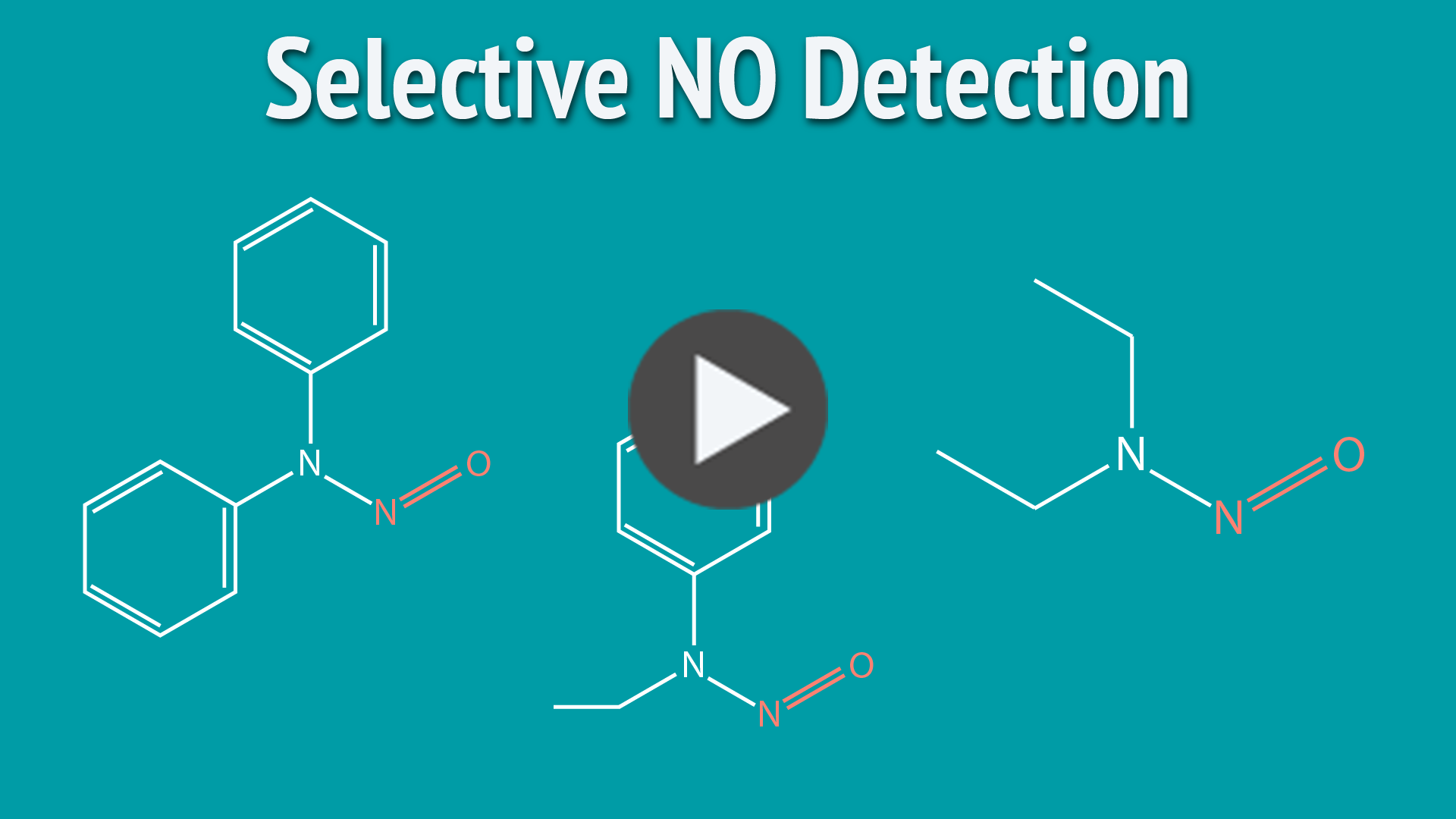
Most detectors see everything. The TEA only sees what matters.
The 800 Series TEA responds specifically to nitrogen–oxide compounds. In complex sample matrices like cosmetics, pharmaceuticals, food, and rubber, most detectors generate signal from the surrounding sample. The TEA does not. The result is cleaner data, faster interpretation, and confident results at trace levels below 2 pg N/sec.
Some analyses require broad detection across many compound types. Others require a detector that responds only to a specific chemical feature, without generating signal from the rest of the sample. The thermal energy analyser is designed for the latter.
Most detectors respond to the bulk of the sample. The TEA does not. It responds to nitrogen and nitrogen–oxide compounds only, ignoring everything else in the matrix. No background interference. No ambiguity about what produced the signal.
What the 800 Series TEA delivers
The TEA is built around selective detection. Rather than responding to the bulk of the sample, it responds to nitrogen and nitrogen–oxide compounds only.
Selective response— the detector ignores compounds that do not contain nitrogen or nitrogen–oxide groups, removing background interference from complex matrices
Trace-level sensitivity— sensitivity below 2 pg N/sec allows detection of nitrogen compounds at very low concentrations, including in regulated applications with strict limits
Standalone or GC-coupled— operates as a standalone detector for total nitrogen screening, or coupled with an Ellutia gas chromatograph for compound-level separation and identification
Two operating modes— nitrogen mode for broad nitrogen detection, nitroso and nitro mode for focused analysis of nitrosamines and explosive residues
Typical applications and compounds
The TEA is built for analyses where the compounds of interest contain nitrogen or nitrogen–oxygen groups. Selective detection removes response from everything else, producing cleaner chromatograms and more reliable quantification.
The TEA is commonly applied across areas such as:
Nitrosamines
NDMA, NDEA, NDELA, and structurally related nitrosamines across pharmaceuticals, cosmetics, food contact materials, rubber, and drinking water. Regulatory frameworks including ICH M7, EU Cosmetics Regulation EC 1223/2009, and EPA Method 521.
Explosive Residue
Nitroaromatic compounds (TNT, DNT), nitrate esters (RDX, PETN), and nitramine explosives in forensic and security screening applications.
Environmental
N-nitrosodimethylamine (NDMA) in drinking water and wastewater. Trace nitrogen compounds in soil and air monitoring programmes.
Trusted in regulated industries
The 800 Series TEA is used by cosmetics manufacturers, pharmaceutical quality teams, and forensic laboratories working to regulatory detection requirements. Sensitivity below 2 pg N/sec meets the analytical demands of EU Cosmetics Regulation EC 1223/2009, ICH M7 nitrosamine guidance, and forensic explosive residue analysis.
Operating modes
The thermal energy analyser can be configured to operate in different modes depending on the type of nitrogen compounds being measured. Each mode is designed to focus the detector response on a specific class of compounds, allowing the analytical approach to be matched to the question being asked.
Nitrogen Mode
Nitrogen mode converts nitrogen content into a measurable signal. The response is independent of compound structure, excluding molecular nitrogen. Use it when the analytical goal is overall nitrogen content rather than identification of individual species.
Nitroso / Nitro Mode
Nitroso and nitro mode focuses the detector response on compounds containing nitroso or nitro functional groups. The detector converts these groups selectively, producing a signal tied directly to their presence. This is the mode used for nitrosamine analysis and explosive residue detection.
Specifications
The 800 Series TEA provides selective nitrogen detection in a compact laboratory instrument. Key technical parameters are summarised below.
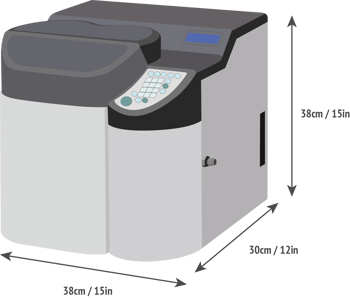
Dimensions 38 cm (H) × 38 cm (W) × 30 cm (D)
Weight 15 kg
Power supply 850 VA 115 V / 230 V, 50–60 Hz
Operating modes Nitro, Nitroso, Nitrogen with Catalyst (820 series only)
Sensitivity < 2 pg N/sec (Signal-to-noise ratio 3:1)
Selectivity gN/gC > 10⁷
Linearity 10⁴
Connectivity PC control via USB or RS232 Downloadable software included for method storage and control
Ready to see the 800 Series TEA in your workflow?
We can walk through your specific application, your current detection setup, and what a TEA configuration would look like for your laboratory. If you have questions about a particular matrix or compound class, bring them to the conversation.
The 800 Series TEA is used across pharmaceuticals, cosmetics, food and drink, rubber and elastomers, forensic science, and environmental monitoring. In pharmaceuticals, it supports nitrosamine testing under ICH M7 guidance. In cosmetics, it is used for compliance with EU Cosmetics Regulation EC 1223/2009. Forensic and security laboratories use it for explosive residue screening. The common thread across all of these is the need for selective, trace-level detection in complex sample matrices.
The TEA detects compounds containing nitrogen or nitrogen–oxygen functional groups. Common applications include nitrosamines such as NDMA, NDEA, and NDELA in pharmaceuticals, cosmetics, and food contact materials; nitroaromatic compounds and nitrate esters in forensic and security screening; and trace nitrogen compounds in environmental monitoring. The detector responds to any compound carrying the relevant functional group, including compounds it has not been specifically calibrated for.
The 800 Series TEA is the detector. The ATNA is a complete automated system built around it. The TEA can be used as a standalone detector or coupled with a gas chromatograph for compound-level analysis. The ATNA integrates the TEA with automated sample handling and the ATNC chemistry, designed specifically for total nitrosamine screening. Laboratories that need high-throughput screening with minimal operator input typically use the ATNA. Those running targeted compound analysis use the TEA coupled with a GC.
The TEA operates as a standalone detector when total nitrogen detection is sufficient. For compound-level analysis, it is coupled with an Ellutia gas chromatograph, which separates individual compounds before they reach the detector. Standalone operation suits applications such as ATNC screening, where a single total value is the required output. GC coupling is used when individual nitrosamines or other specific compounds need to be identified and quantified separately.
Nitrogen mode responds to all nitrogen-containing compounds, excluding molecular nitrogen. The response is independent of compound structure, making it suitable when total nitrogen content is the analytical goal. Nitroso and nitro mode focuses specifically on compounds containing nitroso or nitro functional groups. This is the mode used for nitrosamine analysis and explosive residue detection, where those functional groups define the compounds of interest.
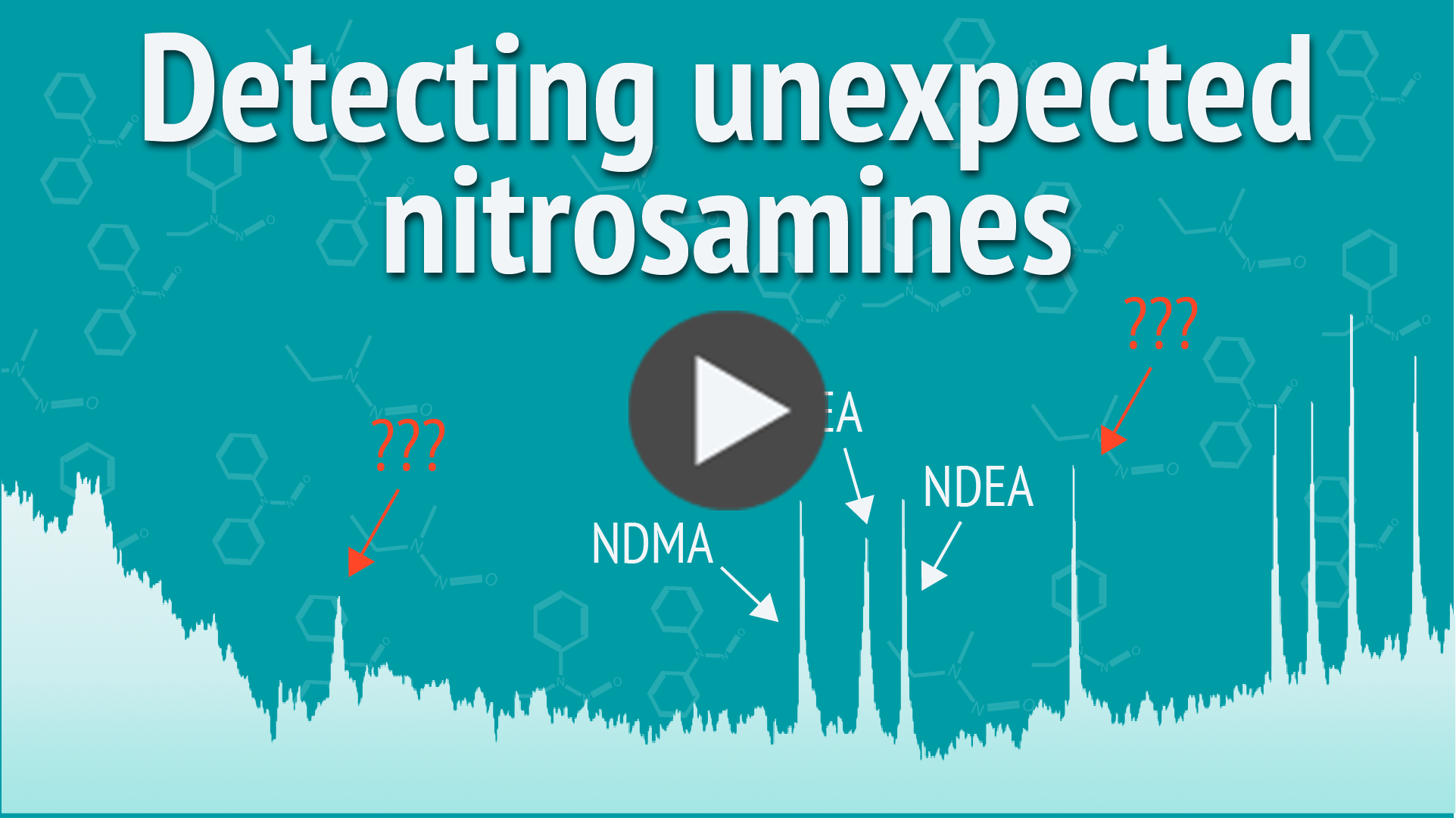
On its own, the TEA does not separate or identify individual compounds. It responds to nitrogen and nitrogen–oxide groups across all nitrosamines present in the sample. When coupled with an Ellutia gas chromatograph, compounds are separated before they reach the detector. Each nitrosamine produces a distinct peak, allowing individual compounds such as NDMA, NDEA, and NDELA to be identified and quantified.
For total nitrosamine screening, the TEA operates as part of Ellutia's ATNA system, which automates the ATNC (Apparent Total Nitrosamine Content) method. ATNC is the recognised approach for demonstrating compliance with limits such as the 50 μg/kg threshold under EU Cosmetics Regulation EC 1223/2009. The ATNA handles sample processing, chemical cleavage, and detection in a single automated run, including overnight batches.
GC-MS is widely used for nitrosamine analysis and provides compound identification through mass spectral matching. The TEA takes a different approach. It responds to the nitrogen–oxide bond present in every nitrosamine, meaning it detects compounds it has not been calibrated for. In complex matrices, the TEA's selectivity produces cleaner chromatograms with less background interference than broad-spectrum detectors. For laboratories running high sample volumes, the TEA is also faster to operate and simpler to maintain than GC-MS systems.
The 800 Series TEA achieves a sensitivity of less than 2 pg N/sec at a signal-to-noise ratio of 3:1. Selectivity is greater than 10⁷ gN/gC, meaning the detector response to nitrogen compounds is ten million times greater than its response to carbon-containing compounds. This level of selectivity is what allows the TEA to produce clean results in complex matrices without interference from the surrounding sample.
Sample preparation for TEA analysis depends on the matrix. For many applications, existing laboratory equipment is sufficient — no specialist preparation hardware is required beyond what most analytical laboratories already have. Liquid samples typically require extraction and concentration steps before analysis. Solid matrices such as rubber or pharmaceutical tablets require dissolution or solvent extraction. Ellutia can advise on preparation approaches for specific matrices as part of a pre-sales discussion.