Melamine Analysis in Milk Powder Using GC-TEA

Application Note:

Learn how melamine is detected in milk powder using a GC coupled with the TEA. Includes nitrogen mode operation, GC conditions, and example results from baby milk samples.

Introduction

Melamine analysis is used to detect fraudulent nitrogen-based adulteration in milk and dairy products. Because melamine is rich in nitrogen, it can artificially inflate apparent protein levels when standard nitrogen-based protein tests are used.

The addition of melamine to food products is not permitted by international food safety authorities. Exposure has been linked to kidney damage and other health risks.

Gas chromatography coupled with Thermal Energy Analysis provides a selective way to detect nitrogen-containing compounds such as melamine in complex food matrices.


Melamine_Baby_Food_Milk

The Challenge


Detecting nitrogen-rich adulterants in protein-rich matrices


Milk powder contains naturally occurring nitrogen from proteins such as casein. Standard protein analysis methods measure total nitrogen, which makes them vulnerable to interference from nitrogen-based adulterants.

Melamine is highly nitrogen rich and can distort apparent protein content. The analytical challenge is to distinguish melamine from naturally occurring nitrogen compounds in a complex dairy matrix.

Detection limits must also align with exposure guidance. WHO and EFSA have set tolerable daily intake levels for melamine at 0.2 mg per kg bodyweight per day. 

For infant consumption, this translates to low ppm level detection requirements.

A selective detection approach is therefore required.

Melamine_Baby_Formula_Milk

The Solution


GC-TEA operating in nitrogen mode 


Standards of melamine and casein were analysed using the Ellutia 820 Thermal Energy Analyser operating in nitrogen mode, paired with the Ellutia 200 Series GC
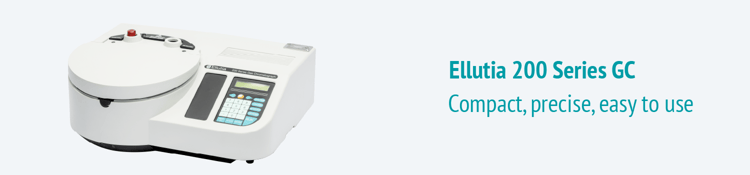


Ellutia_200_GC


In nitrogen mode, the TEA pyrolyser operates at 850 °C. This allows complete breakdown of nitrogen-containing compounds. The resulting nitrogen species react with ozone and are detected selectively.

Although both melamine and casein were derivatised using BSTFA + TMCS, casein is a large, non-volatile protein that remains in the injector liner. This prevents interference with melamine detection.

The combination of GC separation and nitrogen-specific detection provides a targeted method for identifying melamine in milk powder.

Method Overview


How melamine is analysed in milk powder

Melamine and casein standards were derivatised using BSTFA + TMCS prior to injection.

A pre-mixed carton of baby milk was analysed to evaluate potential exposure levels. The matrix produced responses for other nitrogen-containing compounds, resulting in baseline noise. Further clean-up and pre-concentration steps may be required to achieve lower detection limits.


GC Conditions
  • Injector temperature: 250 °C
  • Carrier gas: Helium
  • Constant flow
  • Split time: 1 minute
  • Column 1: Guard column 0.25 mm × 0.25 µm
  • Column 2: EL-5 30 m × 0.32 mm × 0.5 µm
 
TEA Conditions
  • Pyrolyser temperature: 850 °C
  • Interface temperature: 250 °C
  • Sensitivity: 230
  • Pump: Edwards nXDS10i
  • Mode: Nitrogen


Oven Conditions
  • Initial: 115 °C (3 min hold)
  • Ramp: 10 °C/min to 200 °C
  • Ramp: to 290 °C (7 min hold)

Results and Reliability


What the analysis shows


The melamine standard produced a clear response in nitrogen mode. Casein, despite derivatisation, remained within the injector and did not interfere with detection.

The pre-mixed baby milk sample showed responses from other nitrogen-containing compounds, resulting in a noisy baseline. This demonstrates the importance of clean-up and method optimisation when working with complex dairy matrices.

Nitrogen mode operation at 850 °C allows complete breakdown of nitrogen compounds prior to ozone reaction, improving selectivity compared with nitroso mode.


Learn More


Get the full method and results


If you’d like to see the full details behind this testing method, you can download the complete application note. It includes chromatograms, calibration data, and the exact conditions used for the analysis. It’s a handy reference if you want to check your own setup or compare results.


Download the full application note.


Frequently Asked Questions