
Nitrosamine Analysis in Sartans

Application Note:

Analysis of Nitrosamines in Sartans by GC-TEA

Introduction

Sartan medicines have been the focus of significant recalls because of nitrosamine contamination. Compounds such as NDMA and NDEA can appear in these products if impurities are present in raw materials or if certain reactions take place during synthesis. These nitrosamines are harmful, which is why regulators expect manufacturers to monitor them closely.

Testing sartan tablets for nitrosamines helps confirm that batches remain within acceptable limits and that contamination has not taken place during production. GC-TEA provides the sensitivity needed to measure nitrosamines in complex tablet extracts and has been used widely during investigations into sartan-related recalls.

This method uses gas chromatography with TEA detection to separate and identify a range of nitrosamines associated with sartan manufacturing. It gives laboratories a clear and dependable way to check products before release.

Nitrosamines_Sartans

The Challenge


Nitrosamines can appear during sartan synthesis and storage


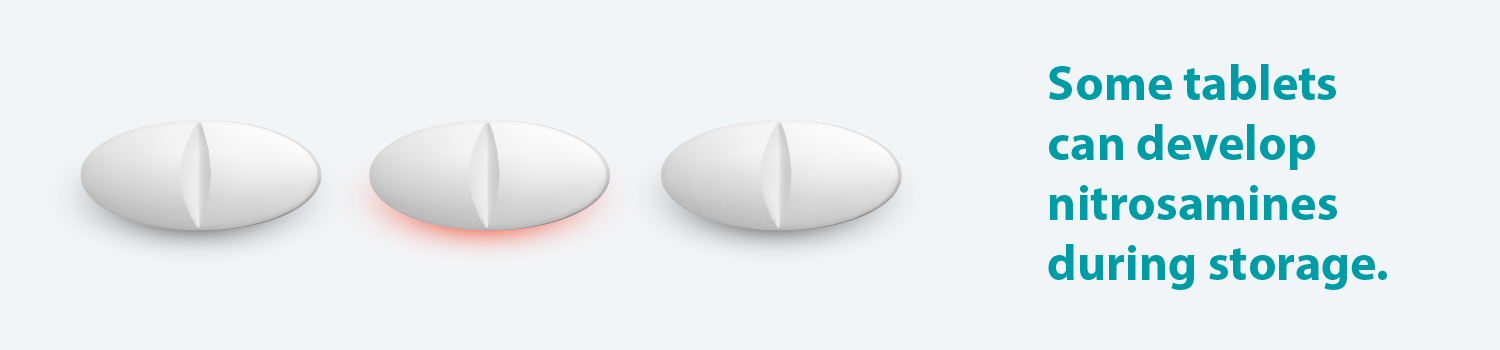
Several sartan medicines have been recalled because nitrosamines were found in finished tablets. These compounds can form when certain impurities are present in raw materials or when side reactions take place during synthesis. Storage conditions can also influence degradation pathways, which adds another source of variation.

Not every batch is affected. Some tablets may contain measurable nitrosamines while others remain within limits. This variability makes it difficult for manufacturers to confirm whether contamination has taken place until testing is carried out. Because the limits for NDMA, NDEA, and related compounds are low, even small amounts can cause a batch to be held or discarded.

Routine screening helps identify when nitrosamines are present and whether levels fall within acceptable limits. To do this effectively, laboratories need a method that can separate nitrosamines clearly and detect them at low concentrations in complex tablet extracts.

Nitrosamines_Sartans_Batches

The Solution


GC-TEA gives a clear way to measure nitrosamines in sartan tablets 


Gas chromatography with TEA detection provides the sensitivity and selectivity needed to measure nitrosamines in sartan products. The GC separates each compound in the tablet extract, and the TEA detects the N–NO functional group shared by all nitrosamines. This makes it well suited to NDMA, NDEA, and the wider group of compounds linked to sartan recalls.

Sample preparation is straightforward. A weighed portion of crushed sartan tablets is mixed with methanol to extract any nitrosamines present. The mixture is shaken, filtered through a 0.45 µm PTFE filter, and injected into the GC-TEA. This simple workflow helps maintain consistency and reduces the chance of contamination.

The method provides clear separation across the nitrosamines tested in the study. Chromatograms show distinct peak shapes and stable baselines, even when compounds are present at low concentrations. Calibration curves are linear across the tested ranges, and repeatability remains high when samples are prepared and analysed under the same conditions.
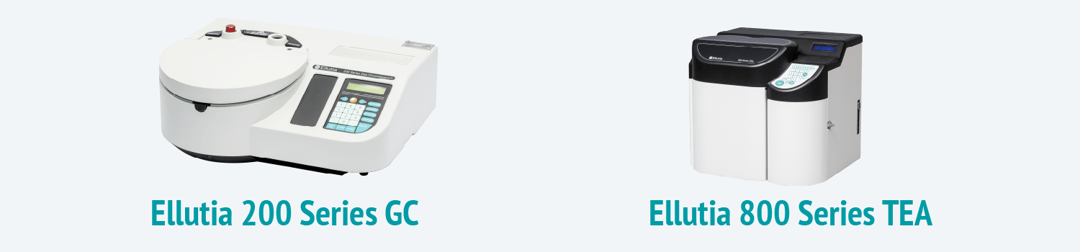
200_Series_GC_Thermal_Energy_Analyser_TEA

Using GC-TEA allows laboratories to screen sartan batches with confidence. The method highlights tablets that contain measurable nitrosamines and supports decisions about batch quality, storage stability, and further investigation.

Method Overview


How nitrosamines are analysed using GC-TEA


A portion of sartan tablets is crushed and weighed. Five hundred milligrams of the powder is mixed with 15 mL of methanol and shaken for 30 minutes to extract any nitrosamines present. The extract is passed through a 0.45 µm PTFE filter to remove solid particles and placed into a clean vial for injection.

The GC separates NDMA, NDEA, and other nitrosamines under controlled conditions. The TEA detects the N–NO functional group that all nitrosamines share, which provides strong selectivity and clear peak identification. This helps distinguish the compounds from the tablet matrix.


Typical GC conditions:

  • Injector: 200 °C

  • Injection mode: Splitless

  • Detector (TEA): 250 °C

  • Pyroliser: 500 °C

  • Oxygen flow: 2 psi

  • Vacuum: 0.3 torr

  • Column: FFAP, 15 m × 0.32 mm × 0.5 µm

  • Oven: Start at 60 °C, ramp at 10 °C/min to 200 °C, hold for 2 minutes

This method gives clear separation across the full set of nitrosamines tested and produce stable baselines suitable for low-level detection. The workflow suits routine testing and helps laboratories identify samples that may need further investigation.

Results and Reliability


What the analysis shows


Chromatograms from spiked sartan extracts showed clear peaks for NDMA, NDEA, and related nitrosamines. Peak shapes were distinct and easy to identify, even when compounds were present at low concentrations. Baselines remained stable, which helped separate the nitrosamines from the tablet matrix.

Calibration curves for NDMA and NDEA were linear across the concentration ranges tested in the study. Detector response was consistent across repeated injections, and relative standard deviation values were low. This confirms that the method performs reliably when samples and standards are prepared under the same conditions.

Stress testing showed how nitrosamine levels can increase when tablets are exposed to elevated temperatures. Extracts from heated samples produced higher NDMA and NDEA signals than extracts from tablets stored under normal conditions. This supports the link between storage conditions, degradation, and nitrosamine formation.

The method gives laboratories a dependable way to assess nitrosamines in sartan products. It highlights samples that contain measurable nitrosamines and supports decisions about batch quality, storage stability, and further investigation.
Learn More


Get the full method and results


If you’d like to see the full details behind this testing method, you can download the complete application note. It includes chromatograms, calibration data, and the exact conditions used for the analysis. It’s a handy reference if you want to check your own setup or compare results.


Download the full application note.

It only takes a few moments to signup.


Frequently Asked Questions