GC-TEA Nitroso and Nitro Detection
Selective detection for nitroso and nitro compounds. Trace-level sensitivity. Proven across regulated industries.
Nitroso and nitro compounds appear in pharmaceuticals, food, cosmetics, forensics and industrial chemistry. For nitrosamine analysis, standard GC detectors struggle at the concentrations regulators now expect. GC-TEA in nitroso mode gives you compound-level detection, with a selectivity that general-purpose detectors cannot match.

Compatible with most GCs
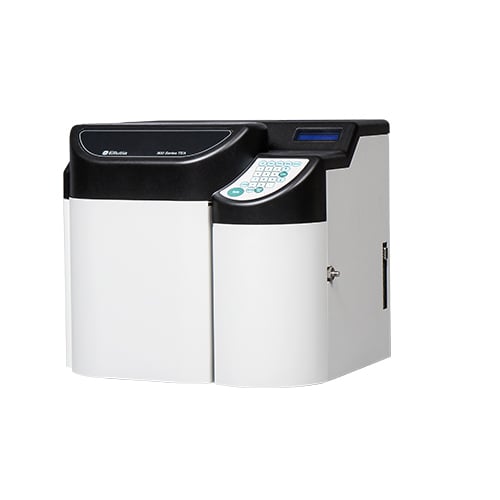
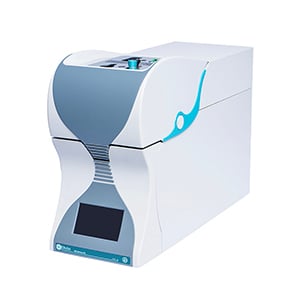
The 800 Series TEA connects to the MS port of most gas chromatographs. Add selective nitroso detection to your existing setup without replacing your current instrument.
Trace-level sensitivity
Sensitivity of less than 2 pg N/sec at a signal-to-noise ratio of 3:1. Suited to methods where detection limits are set in the parts-per-billion range.
Responds only to what you're looking for
The TEA produces a signal only from nitroso and nitro compounds. Everything else in the sample is ignored, giving you a clean result without extensive sample cleanup.
When general-purpose detection is not enough
Standard GC detectors respond to a wide range of compounds. In complex sample matrices, that creates interference. Background noise competes with the signal from low-level nitrosamines, and the result is either unreliable data or a method that requires extensive cleanup before it can run.
The TEA responds specifically to nitroso and nitro compounds. By making the detector itself selective, GC-TEA gives you a clean signal from the compounds you care about, without fighting the rest of the sample matrix.
Selective at the point of detection
The TEA's selectivity comes from what happens after separation. Here is how the process works.
Step 1 - Separation
The gas chromatograph separates the compounds in your sample. Each compound elutes from the column at a different time, arriving at the detector individually.
Step 2 - Pyrolysis
The GC effluent passes into the TEA's pyrolyser. Nitroso and nitro compounds cleave at the N-O bond, releasing nitrosyl radicals. The pyrolyser temperature is selectable between 250 and 700°C. An optional CTR filter removes most by-products before they reach the reaction chamber.
Step 3 - Reaction
The nitrosyl radicals react with ozone in the reaction chamber. This produces electronically excited NO2, which rapidly decays to its ground state, emitting light in the near-infrared region.
Step 4 - Detection
A photomultiplier measures the emitted light. The signal corresponds directly to the nitroso or nitro compounds present in the original sample.
Where GC-TEA in nitroso mode is used
GC-TEA in nitroso mode is used in regulatory compliance workflows across pharmaceuticals, food, and cosmetics. Its selectivity for the nitroso and nitro compound class means it does not respond to other matrix components.
TEA is a very useful instrument. I use it to detect traces of organic explosions in many different types of samples. It is a very sensitive detection instrument and not complicated. We get help from engineers if we have any problems. Gives us great clear results. I like to work with it.
Love this piece of equipment. Works with Empower 3 software. Uses research grade oxygen. Very reliable instrument.
Brilliant, very little footprint.
Planning a nitrosamine testing programme? Our Nitrosamine Analysis Buyers Guide covers detector options, method considerations, and how to choose the right configuration for your application.
Nitrosamine Analysis Buyers Guide

Works with your existing GC, or as a complete system
Add the TEA to your existing instrument
The 800 Series TEA connects to the MS port of most gas chromatographs. If you already have a GC in your lab, the TEA can be added without replacing your current setup.
Complete GC-TEA systems from Ellutia
For labs building a new testing capability, Ellutia offers complete GC-TEA systems using our own gas chromatographs.
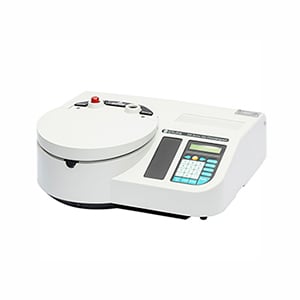
200 Series GC with TEA
Compact and reliable. Suited to routine nitrosamine testing.
500 Series GC with TEA
Conventional, fast, and ultra-fast chromatography from one instrument.
Talk to our team about your method
If you need to add TEA detection to your current GC setup, or you are starting from scratch, our team can talk through what the right configuration looks like for your application. We have worked with labs across pharmaceuticals, food, cosmetics, and other regulated industries.
Frequently asked questions
-
Which industries use GC-TEA in nitroso mode?
GC-TEA in nitroso mode is used across any industry where nitroso or nitro compounds are a regulatory or safety concern. The most common areas are pharmaceuticals, food and beverages, cosmetics and personal care, tobacco, rubber and elastomers, and cannabis. It is also used in forensic and security applications where nitro-containing explosive residues are relevant.
-
What nitrosamines can it detect?
GC-TEA in nitroso mode responds to any compound containing a nitroso or nitro functional group. In nitrosamine testing this includes NDMA, NDEA, NDELA, NMBA, NPIP, NMOR, and related compounds. The specific nitrosamines detected depend on your method and column selection rather than any limitation of the detector itself.
-
Can it detect all nitroso compounds, not just nitrosamines?
Yes. Nitrosamines are the most regulated and widely tested class, but the TEA responds to any compound carrying an N-NO or N-NO2 bond. This includes nitro compounds such as those found in explosive residues, as well as other nitroso-containing species in industrial and environmental samples.
-
Will it work with my existing GC?
The 800 Series TEA is compatible with most gas chromatographs from other manufacturers. It connects via the MS port, typically where a pyrolyser would attach. If you are unsure whether it will work with your current setup, our team can talk through the technical requirements before you commit to anything.
-
How does nitroso mode differ from nitrogen mode?
Nitroso mode focuses specifically on compounds containing nitroso or nitro functional groups. Nitrogen mode has a broader response — it detects any nitrogen-containing compound, with the exception of molecular nitrogen. Nitroso mode is the right choice when you need compound-class selectivity for nitrosamines or nitro compounds. Nitrogen mode is better suited to applications where overall nitrogen content is the analytical goal.
-
What is the detection limit for NDMA?
The 800 Series TEA has a sensitivity of less than 2 pg N/sec at a signal-to-noise ratio of 3:1. Actual detection limits for NDMA and other specific nitrosamines depend on your method configuration, sample preparation, and column choice. Our team can advise on method setup for your specific application.
-
Do I need a complete system or just the TEA?
That depends on what you already have. If you have a compatible GC in your lab, the TEA can be added as a selective detector without replacing your existing instrument. If you are building a new nitrosamine testing capability from scratch, Ellutia offers complete GC-TEA systems using the 200 Series or 500 Series GC.
-
How does GC-TEA compare to GC-MS for nitrosamine analysis?
Both methods are used for nitrosamine analysis and each has strengths. GC-MS provides structural confirmation and can identify unknown compounds, which makes it valuable for research and method development. GC-TEA offers simpler operation, lower running costs, and a detector that is purpose-built for nitroso selectivity. For routine compliance testing where the compounds of interest are known, GC-TEA is often the more practical and cost-effective choice. Some labs use both — GC-MS for method development and confirmation, GC-TEA for routine throughput.