Residual Solvents in Printed Packaging Using Gas Chromatography

Application Note:

Learn how residual solvents in printed packaging are measured using headspace GC-FID. Includes sample preparation, GC conditions, and example results from printing inks.

Introduction

Residual solvent analysis is used to assess volatile compounds that remain in printed packaging materials after production. These solvents originate from inks, coatings, and adhesives applied during printing.

Even at low levels, residual solvents can affect odour and taste. In food contact materials, they may migrate into the packed product. Manufacturers therefore need to measure solvent levels to confirm that packaging materials meet safety and quality requirements.

This method uses the Ellutia 200 Series Gas Chromatograph with FID detection, combined with manual headspace sampling, to separate and quantify residual solvents in printed packaging


Printed_Packaging_Residual_Solvents

The Challenge


Detecting volatile solvents at low levels in complex materials


Printed packaging contains a mixture of solvents that can remain trapped within the substrate after production. These compounds are often volatile and present at low concentrations.

The analytical challenge is to measure multiple solvent types in a single run. Packaging matrices vary widely, from flexible films to coated materials, which can influence solvent release.

Reliable analysis requires a method that can:

  • Isolate volatile compounds from the packaging material
  • Separate a wide range of solvents
  • Quantify components consistently for reporting

Headspace sampling isolates volatile solvents from the packaging material. The GC then separates each compound for measurement.


Printed_Packaging_Residual_Solvents_01

The Solution


Headspace GC-FIDF for multi-component solvent analysis 


The Ellutia 200 Series Gas Chromatograph fitted with FID was used to analyse residual solvents in printed packaging.
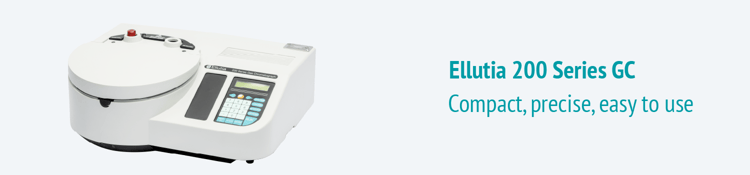


Ellutia_200_GC


An FID is well suited for this analysis because it offers high sensitivity for organic compounds, wide linear response, and stable signal performance.

Headspace sampling allows volatile solvents to partition into the gas phase before injection. This reduces matrix interference and improves repeatability.

The system was configured with an ELM-VOC column, which provides separation across a broad solvent rang.


 

Method Overview


How residual solvents are analysed in packaging materials

A 10 µL volume of a 25-component solvent mix standard was placed into a 20 mL headspace vial. The vial was held at 100 °C for 45 minutes in the Ellutia Manual Headspace module


GC Conditions
  • Injector temperature: 230 °C
  • Liner: Focus liner with wool
  • Carrier gas: Hydrogen
  • Constant pressure: 4.65 psi
  • Splitless flow: 70 mL/min
  • Column: ELM-VOC 60 m × 0.32 mm × 1.8 µm
  • Initial oven temperature: 40 °C (hold 4 minutes)
  • Ramp: 4 °C/min to 200 °C (hold 3 minutes)
  • Detector temperature: 240 °C
 
Headspace Conditions
  • Incubation temperature: 100 °C
  • Equilibration time: 45 minutes
  • Sampling time: 1 minute


Results and Reliability


What the analysis shows


The 25-component solvent mix standard produced clear peak separation under the stated conditions.

The same procedure was applied to a yellow printing ink sample. The chromatogram showed identifiable solvent peaks that were evaluated using standard industry practice, omitting peaks below 1 percent and reporting ratios of total peak area.

The example sample was reported as:

  • 60 percent Ethanol
  • 2 percent 2-Propanol
  • 4 percent Ethyl Acetate
  • 9 percent n-Butanol
  • 25 percent 2-Ethoxyethanol

These results demonstrate that headspace GC-FID provides repeatable profiling of volatile solvents in printed packaging materials.


Learn More


Get the full method and results


If you’d like to see the full details behind this testing method, you can download the complete application note. It includes chromatograms, calibration data, and the exact conditions used for the analysis. It’s a handy reference if you want to check your own setup or compare results.


Download the full application note.


Frequently Asked Questions